


The Science of Routine: How to Use Habit Stacking for Daily Success
Do you find it challenging to keep new habits? You download productivity apps, set alarms, and rely heavily on sheer willpower. Eventually, your motivation fades entirely, and you quickly revert to your old routines.
Imagine achieving your personal goals effortlessly without feeling mentally exhausted. You can actually train your brain to adopt new behaviors automatically. When you learn how to use habit stacking for daily success, everything changes.
This powerful psychological framework removes the heavy friction from your daily goals. We will explore the deep science behind this method together. You will quickly learn how to transform your life, one tiny step at a time.

What Is the Neuroscience Behind Behavioral Momentum and Cue-Driven Routines?
Your brain builds complex networks based on your daily repeated actions. This natural process creates strong neural pathway reinforcement over time. Your mind prefers efficiency and quickly automates tasks you perform frequently.
When you link a new behavior to an established one, you leverage synaptic pruning. Your brain naturally strengthens connections that fire together regularly. This biological advantage makes anchor habit psychology incredibly effective.
You essentially piggyback on an existing, sturdy neural pathway. This eliminates the need to build a new habit from scratch. You create unstoppable behavioral momentum with almost zero extra cognitive effort.
Stop Relying on Willpower: Use Habit Stacking for Daily Success Instead
Willpower acts like a fragile muscle that fatigues quickly throughout your busy day. A study from Stanford University shows that cognitive depletion ruins our best intentions. You simply cannot force yourself to change through sheer effort alone.
You must rely on behavioral conditioning instead of fleeting motivation. When you use habit stacking for daily success, you bypass mental fatigue entirely. You naturally trigger the habit loop using environmental cues rather than sheer force.

5 Crucial Rules for Connecting Micro-Habits
Building a reliable routine requires proper micro-habit integration. You must follow specific guidelines to ensure your new behaviors actually stick. Here are five crucial rules to guide your journey:
- Keep the new action under two minutes initially.
- Pick an anchor habit you do every single day.
- State your exact intention clearly and aloud.
- Perform the new habit immediately after the anchor.
- Reward yourself quickly to activate your dopamine cycle.
These five rules completely prevent your brain from feeling overwhelmed by change. They act as a blueprint for long-term consistency. You will easily establish strong, lasting routines without experiencing any frustrating setbacks.
How to Choose the Perfect Anchor to Use Habit Stacking for Daily Success
Your entire strategy relies on finding the perfect daily trigger. You must carefully identify your anchor habit to ensure long-term consistency. A weak anchor will always cause your new routine to fail.
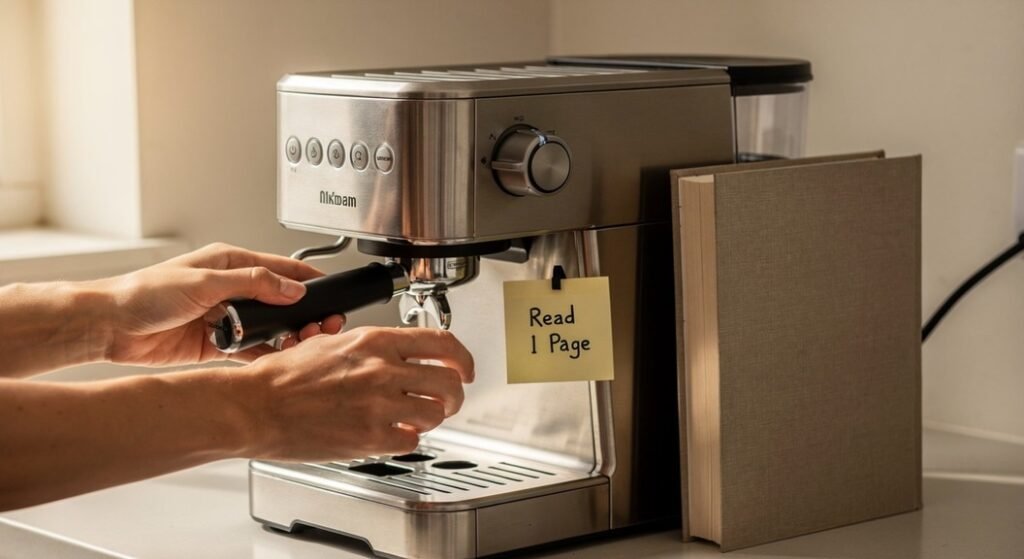
You should look for deeply ingrained actions that happen automatically. Brushing your teeth or turning on the coffee maker is an excellent example. Let us break down how to find your best anchors.

Identify Your Non-Negotiable Morning Anchors
Your mornings contain dozens of highly reliable, automatic actions. You probably brew coffee, shower, or check your phone every single day. These actions serve as incredibly sturdy foundations for any new behavior.
List out everything you do during your first waking hour. Choose an action that you never skip, regardless of your mood. You can then securely attach a new behavior to this specific event.
Match the Frequency of the Old and New Behaviors
You cannot stack a weekly habit onto a daily anchor. If you want to floss daily, attach it to your daily toothbrushing routine. Frequency matching prevents cognitive dissonance and keeps your brain perfectly aligned.
Mismatched frequencies confuse your internal schedule and ruin your consistency. Always align the timing of both actions perfectly. This smart alignment naturally reinforces your vital cue-driven behavior every time.
Ensure the Physical Context Makes Sense
Your physical environment plays a massive role in habit formation. You should not plan to meditate in the kitchen right after brewing coffee. Move your new habit to a location that naturally supports it.
For example, keep your journal on your nightstand if you want to write before bed. This simple spatial strategy greatly reduces mental friction. It naturally guides your body to perform the desired action.

How to Use Habit Stacking for Daily Success in Your Morning Routine
Mornings offer the best opportunity for effective daily routine optimization. Your brain is rested and highly receptive to clear, structured patterns. You can easily use habit stacking for daily success before leaving your house.
After you pour your morning coffee, drink one full glass of water. Once you’ve put on your work shoes, take a moment to quickly review your top three goals. These tiny additions create a massive positive impact on your day.
7 Micro-Habits to Use Habit Stacking for Daily Success Without Burnout
You must always start with micro steps to avoid mental burnout. Small actions require very little energy but yield incredible compound results. Here are seven tiny habits to add to your day:
- After sitting at your desk, take three deep breaths.
- After opening your laptop, write down one priority.
- After eating lunch, walk outside for a few minutes.
- After ending a meeting, stretch your arms fully.
- After closing your email, clear your desk surface.
- After dinner, wipe down the kitchen counters immediately.
- After brushing your teeth, quickly floss one tooth.
These small additions effortlessly fit into your busy life. You easily use habit stacking for daily success without feeling overwhelmed. The secret lies in keeping the barrier to entry extremely low.

Master Your Evening Wind-Down Routine for a Better Tomorrow
Your evening routine heavily dictates your energy levels for the following day. According to the National Institutes of Health, poor sleep hygiene severely damages cognitive function. You must actively prepare your mind for deep rest.
After you turn off the television, dim your living room lights. Once you’ve washed your face, take a moment to write down one thing you appreciate. These calming sequences lower your heart rate and prepare your body for sleep.
Can You Use Habit Stacking for Daily Success When Your Schedule Is Unpredictable?
Many professionals struggle with highly chaotic, constantly shifting daily schedules. You can still use habit stacking for daily success by focusing on flexible anchors. Use events that happen regardless of the exact time.
For example, you can use meal times or bathroom breaks as your triggers. Establishing strong implementation intentions helps you adapt to sudden changes easily. You simply tie your new action to a universal daily event.
Overcome the Trap of Multitasking When You Use Habit Stacking for Daily Success
Many people confuse habit stacking with stressful, inefficient multitasking. You should never attempt to perform two complex tasks simultaneously. True habit stacking relies entirely on sequential, highly focused actions.
When you attempt to multitask, you disrupt your cognitive habit loops. Your brain constantly switches gears, which drains your mental energy rapidly. You must complete your anchor habit fully before starting the new behavior.
How to Use Habit Stacking for Daily Success to Boost Workplace Productivity
European workers often face intense demands regarding efficiency and output. Recent Eurostat data highlights the growing need for sustainable productivity methods across the EU. You can easily build behavioral momentum to manage heavy workloads.
After you finish reading an email, file it away immediately. After you complete a major project, take a five-minute screen break. These professional stacks help you maintain sharp focus throughout the entire workday.
By linking these actions, you effortlessly use habit stacking for daily success. You create a highly organized workspace that naturally supports your career goals. This approach greatly reduces daily workplace stress.

4 Common Mistakes People Make When Designing Their Behavioral Loops
Designing a new routine requires careful planning and realistic expectations. Many beginners accidentally sabotage their own progress by ignoring basic psychology. Here are four common mistakes you must avoid:
- Choose an anchor habit that you only perform occasionally.
- Making the new behavior far too difficult or time-consuming.
- Forgetting to reward your brain’s sensitive dopamine reward system.
- Giving up entirely after missing just one single day.
You can easily use habit stacking for daily success by successfully dodging these common errors. Keep your initial goals incredibly small and focus entirely on building consistency first.
Track Your Progress: Use Habit Stacking for Daily Success and Measure It
You absolutely cannot manage what you do not accurately measure. You must actively track your daily progress to maintain your newfound motivation. Visual evidence of your success keeps your brain highly engaged.
Use a simple wall calendar to mark every successful day. These visual habit tracking metrics provide an immediate sense of deep satisfaction. The growing chain of marks prevents you from breaking your new streak.
When you review your progress weekly, you easily spot weak links. You can then adjust your routines to use habit stacking for daily success more effectively. Data always drives better behavioral decisions.

How to Use Habit Stacking for Daily Success to Improve Mental Health
Structured daily routines deeply comfort an anxious, overwhelmed human brain. A PubMed study reveals that predictable routines significantly lower daily cortisol levels. You literally calm your nervous system by knowing what comes next.
You can easily incorporate simple grounding exercises into your busy mornings. After you drink your morning coffee, write down three things you value. This small pause shifts your entire mental state perfectly.
Whether you walk 1 mile (1.6 kilometers) or meditate for five minutes, consistency matters. You use habit stacking for daily success to actively protect your mental well-being against modern societal chaos.
6 Long-Term Benefits When You Use Habit Stacking for Daily Success Permanently
Your daily life completely transforms when you automate your positive behaviors. The long-term rewards easily justify the initial effort of building these routines. Here are six incredible benefits you will experience:
- You dramatically reduce your daily cognitive decision fatigue.
- You achieve massive goals through consistent, tiny actions.
- You build profound self-trust and unshakeable personal confidence.
- You reclaim hours of previously wasted time every week.
- You lower your daily stress and baseline anxiety levels.
- You effortlessly maintain a healthy, highly balanced lifestyle.
These benefits compound beautifully over months and years of practice. You fundamentally change your identity when you use habit stacking for daily success. You become a person who simply gets things done.

Frequently Asked Questions (FAQs)
1. How do I choose the best anchor habits for habit stacking in my daily routine?
You must always identify your anchor habit by observing your current daily actions closely. Look for behaviors you do every day, like brushing your teeth or brewing morning coffee. Ensure your chosen anchor perfectly matches the frequency of your new desired habit. If you want a daily result, you absolutely need a daily trigger to ensure permanent success.
2. What is a simple example of habit stacking?
A classic example is stating, “After I brush my teeth, I will drink a glass of water.” You pair a new, desired behavior directly onto an established daily routine to trigger the action automatically.
3. How many habits should I stack at once?
You should start by attaching just one tiny new habit to your anchor to avoid cognitive overwhelm. Once that single connection becomes completely automatic after a few weeks, you can slowly chain more habits together.
4. What is the difference between habit stacking and habit chaining?
Habit stacking adds one new behavior to a single existing anchor, whereas chaining links multiple habits together in a sequence. Both methods successfully rely on using one completed action as the cue to trigger the next.
5. Can you use habit stacking to break unproductive habits?
Yes, you can break unhelpful habits by keeping your existing trigger but swapping the negative action for a positive one. For example, if sitting on the couch triggers mindless scrolling, stack the habit of opening a book on top of it instead.
6. Why does habit stacking work better than willpower?
Willpower is a finite resource that depletes quickly, while habit stacking leverages your brain’s strong, existing neural pathways. By piggybacking on a routine you already do on autopilot, the new behavior requires almost zero mental effort.