
7 design choices that promote spatial wellness
Does walking into your home make you feel instantly exhausted? Many people feel physically drained by their own living spaces. Your daily environment constantly shapes your mood and mental health.
Imagine opening your front door and feeling an immediate wave of deep calm. You can actually design your rooms to heal your weary mind. You can promote spatial wellness today to improve your life.
Let’s explore exactly how you can transform your space using simple, powerful psychological tricks to reclaim your peace.
Wellness-Centered Interiors: Design Choices That Support Better Sleep and Health
Your home is not just a place to store your belongings; it acts as a physical extension of your mind and body. Creating healthy home environments requires clear intention and smart architectural choices.
Poor interior design actively spikes your daily stress levels. By maximizing natural light and rethinking your furniture layout, you can lower your heart rate and improve your focus. Environmental psychology studies show that a well-designed room significantly reduces cortisol production. You can easily build a beautiful space that nurtures your health.
What Does It Actually Mean to Promote Spatial Wellness in Your Home?
Spatial wellness means your physical space supports your emotional needs daily. It goes beyond simple aesthetics or buying expensive living room furniture. It relies heavily on psychological space planning to reduce hidden stressors.
When you promote spatial wellness, you align your home with biology. You create specific areas for rest, work, and joyful connection. Your brain responds beautifully to this clear, organized, and intentional structure. This approach uses highly effective environmental stress-reduction techniques to turn any chaotic house into a true personal sanctuary.
7 Fundamental Design Choices That Promote Spatial Wellness
You need highly practical steps to build a calming home environment. Let’s explore seven crucial choices that actively promote spatial wellness in your house:
- Apply biophilic interior architecture to connect your indoor spaces with natural environments.
- Optimize circadian lighting to match your body’s natural daily energy rhythms.
- Implement strict visual-clutter management to quickly calm your overstimulated nervous system.
- Master spatial flow dynamics so you move through your rooms without any physical frustration.
- Install acoustic comfort solutions to block out harsh, unwanted ambient noises.
- Choose natural, low-toxin building materials to greatly improve your overall indoor air quality.
- Consciously create rest zones where you can easily unplug from daily digital demands.
These seven choices work together to heal your mind and body, creating a massive shift in your daily mood.
How to Integrate Biophilic Elements for a Healthier Environment
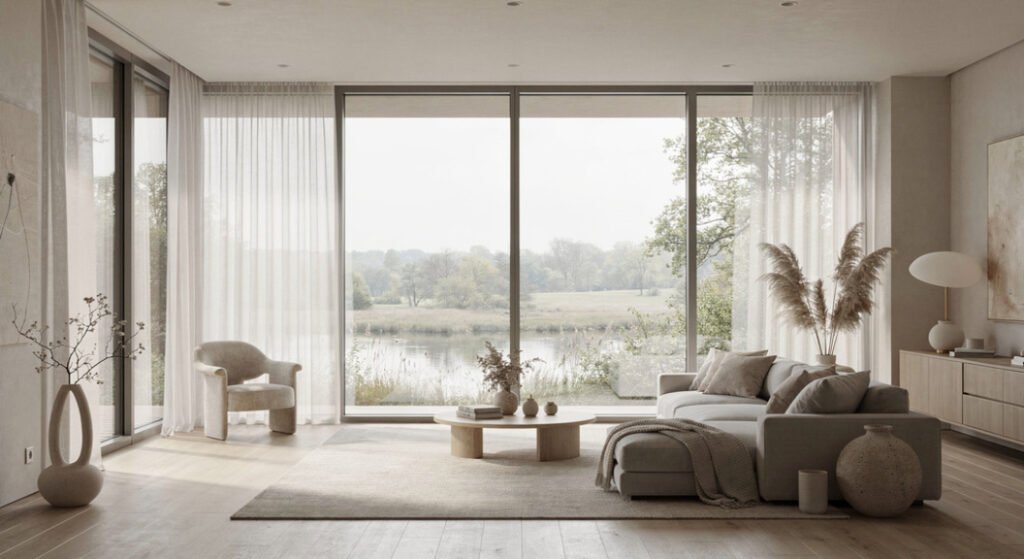
Humans possess a deep, biological need to connect with living nature. Adding simple green plants instantly transforms the energy of any room. This powerful concept drives modern biophilic interior architecture forward.
You can easily integrate natural textures like raw wood or rough stone. Even a small indoor water feature can help lower your blood pressure quickly. Your nervous system naturally relaxes when it senses organic shapes. Prioritize natural elements to build restorative, healthy room structures today.
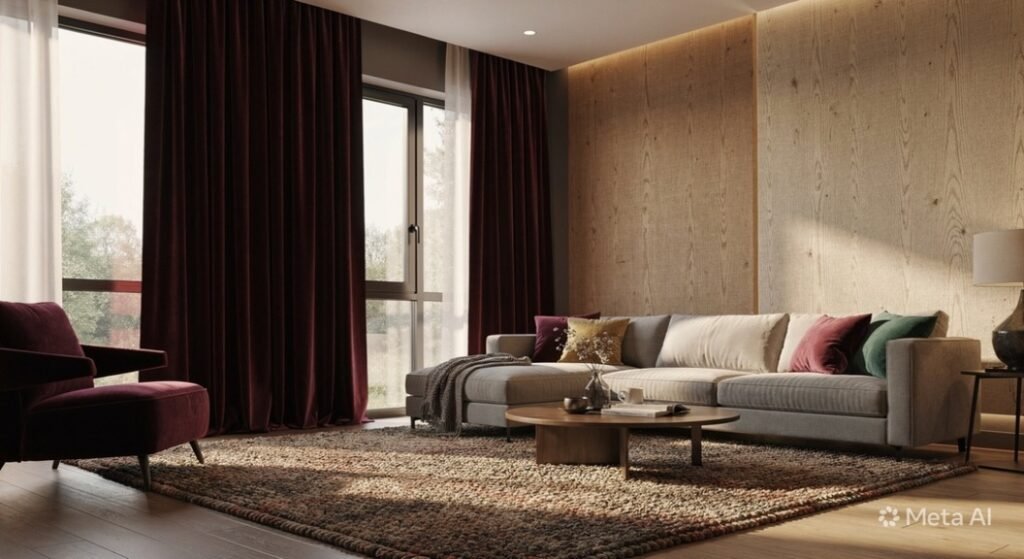
Stop Ignoring Lighting: Optimize Your Bulbs to Promote Spatial Wellness
Harsh overhead lighting ruins your natural sleep cycle every single night. You must rethink your lighting fixtures to truly promote spatial wellness. Start by using warmer, softer bulbs in your main living areas.
Proper circadian lighting optimization mimics the natural progression of the sun. Use bright, cool light during the day to boost your energy, and switch to dim, warm light as the evening approaches. This simple daily change helps your brain produce natural melatonin effectively, ensuring you sleep much better and wake up feeling completely refreshed.
Master Clutter to Reduce Anxiety and Reclaim Your Mental Clarity
A messy, disorganized room directly creates a highly anxious, distracted mind. Your brain processes visual clutter as unfinished tasks and constant demands. You must reduce this visual noise to find real mental peace.
Implement strict visual clutter management by hiding daily items out of sight. Use closed wooden cabinets instead of open shelving for better results. This daily practice is a core element of holistic home decoration, allowing your tired eyes to rest and your mind to wander freely.
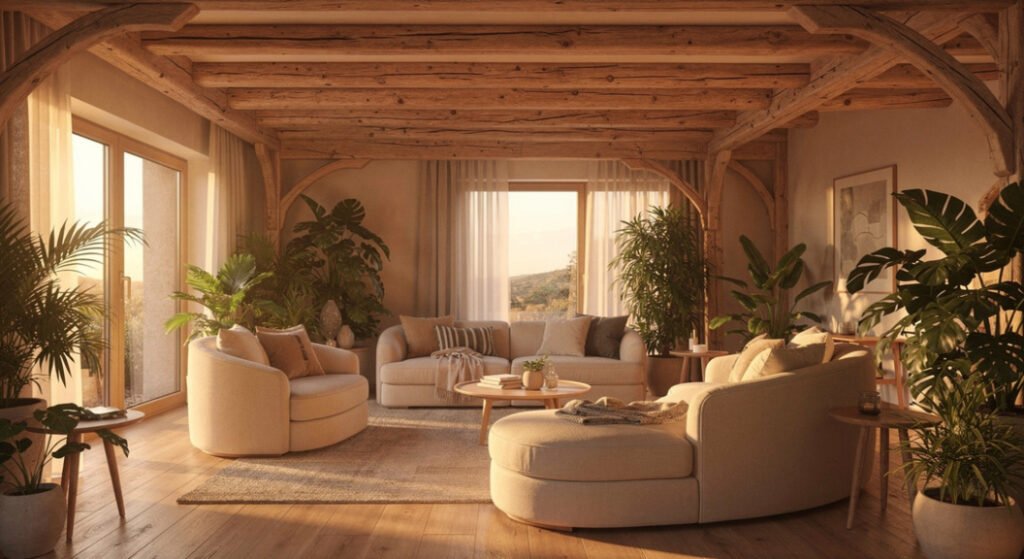
3 Acoustic Control Methods That Promote Spatial Wellness in Open Plans
Open floor plans look beautiful, but they often echo terribly. Constant background noise spikes your stress and ruins your focus completely. You need effective acoustic comfort solutions to fix this modern problem:
- Soften floors: Add heavy, textured wool rugs to absorb harsh sounds on hard flooring.
- Dampen windows: Hang thick, sound-dampening velvet curtains around large glass living room windows.
- Absorb overhead echoes: Install soft acoustic panels on high ceilings to stop bouncing sound waves.
These three simple methods successfully promote spatial wellness by softening your auditory environment.
How to Arrange Your Furniture Layout to Promote Spatial Wellness
How you place your furniture completely dictates how you feel inside a room. Poor furniture placement makes a large space feel tight and chaotic. You must optimize room layouts for better psychological comfort and ease.
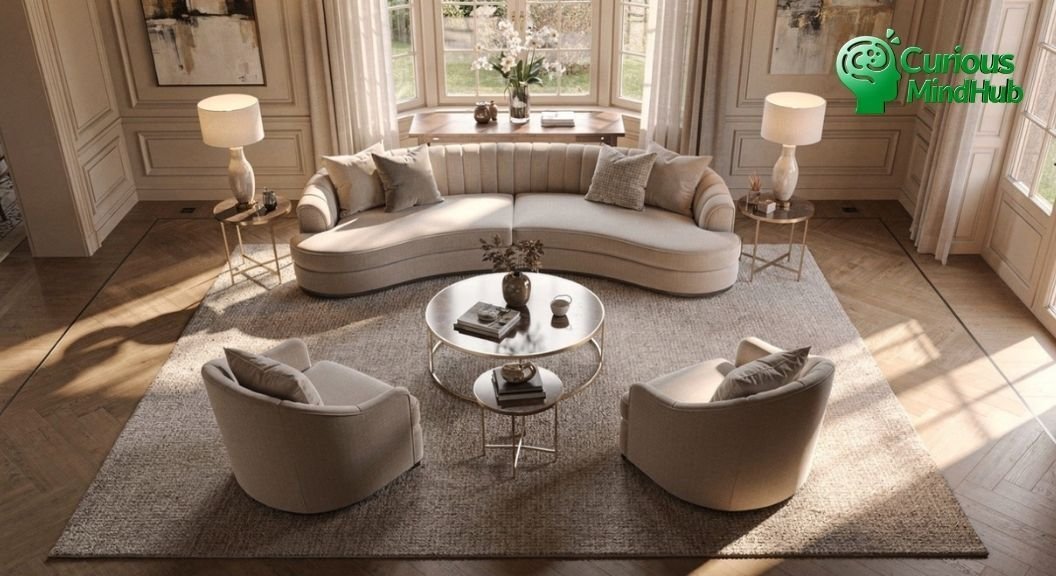
Use smart sensory room layouts to guide your daily movement naturally. Do not block natural pathways or push all your furniture flat against the walls. Pull your furniture inward to create intimate, highly cozy seating areas. Good spatial flow allows energy to move freely, making your home feel instantly larger and much more welcoming.
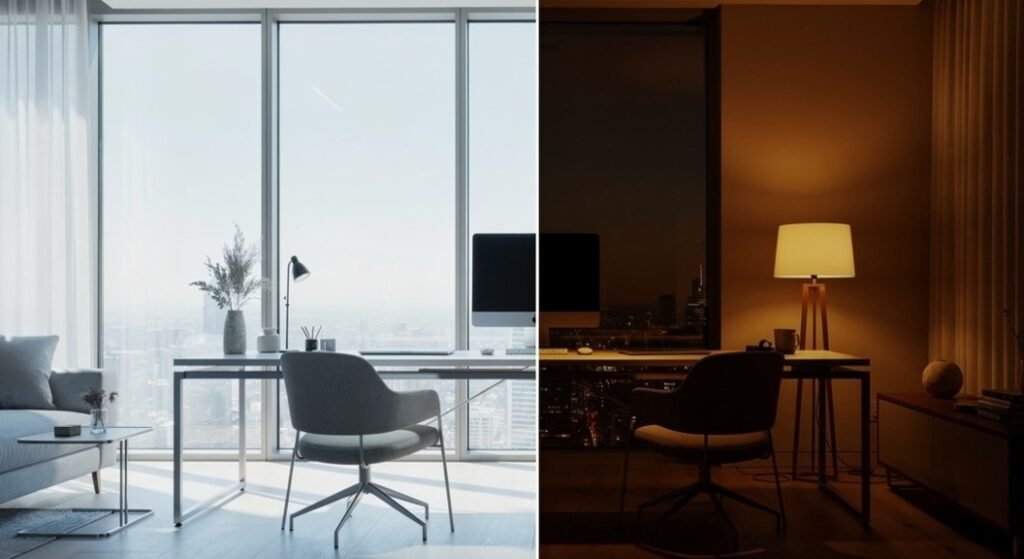
Redefine Your Bedroom: Sleep Solutions That Promote Spatial Wellness
Your primary bedroom must serve as a strict sanctuary for deep sleep. You absolutely cannot compromise on comfort in this vital space. Smart bedroom design directly impacts your long-term physical and mental health. Let’s look at three crucial bedroom improvements you need today.
Position Your Bed for Maximum Psychological Safety
Your primal brain needs to feel safe to fall asleep properly. Place your bed so you can easily see the bedroom door. This taps into our deepest human need for basic physical security. Avoid placing your bed directly beneath a large, heavy glass window; a solid wall behind your headboard provides deep, necessary psychological comfort.
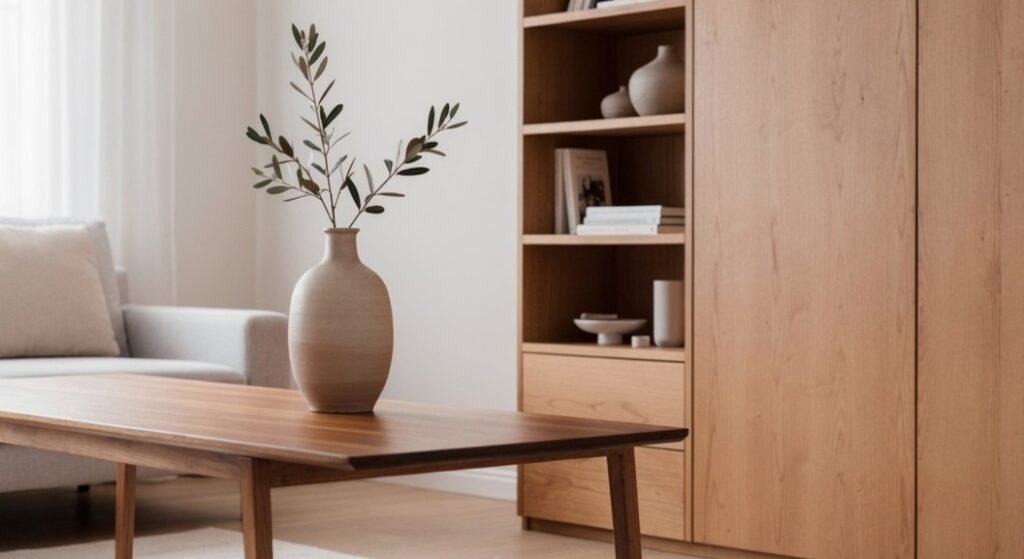
Implement Blackout Solutions and Circadian Lighting
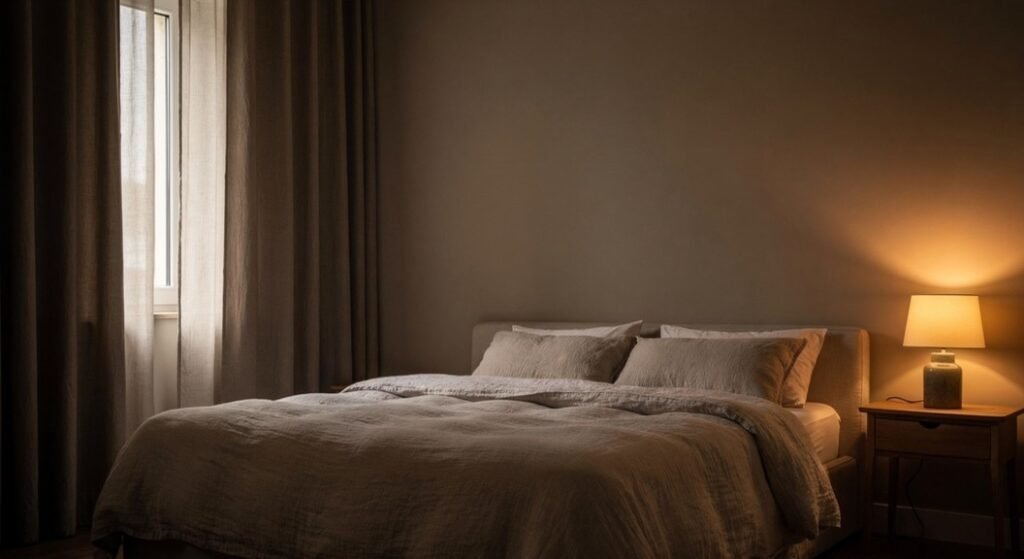
Bright streetlights easily disrupt your critical, restorative REM sleep cycles. Install high-quality blackout curtains to block all outside ambient light completely. Additionally, use dim amber lamps on your nightstands for late-evening reading to signal your brain that sleep is near.
Choose Organic Bedding Materials to Reduce Toxin Exposure
You spend a third of your life breathing deeply in your bed. Synthetic sheets often trap body heat and release mild chemical fumes. Switch to organic cotton or pure linen to improve indoor airflow. These natural fabrics regulate your core body temperature perfectly all night.
How to Utilize Natural Textures for Grounding Sensory Experiences
Modern life forces us to touch cold glass screens constantly. We desperately crave the grounding feeling of real, natural textures.
Add a chunky wool blanket to your main living room sofa or place a raw wooden bowl on your smooth kitchen counter. These varied textures stimulate your physical senses in a very healthy way. This tactile variety is essential for creating restorative spaces, bringing a comforting, earthy energy into any sterile modern room.
Why Do Low-VOC Materials Promote Spatial Wellness Better Than Synthetics?
Many standard interior paints and carpets release invisible, harmful gases known as “volatile organic compounds” (VOCs). These slowly damage your long-term respiratory health.
Choosing low-VOC paints and natural solid furniture helps you avoid this hidden danger. Healthy building materials actively promote spatial wellness by keeping your indoor air quality excellent, allowing you to breathe deeply without worrying about hidden chemical exposure.
Cultivate Dedicated Rest Zones to Promote Spatial Wellness Daily
You cannot work and relax effectively in the same spot. Your busy brain needs physical boundaries to switch gears properly.
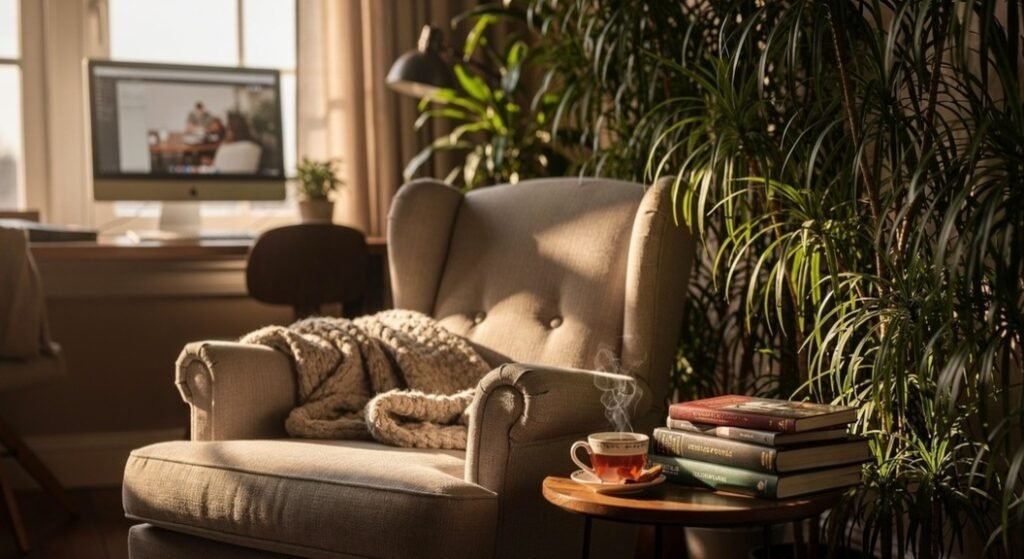
Designate a cozy corner specifically for reading or meditating quietly. Keep your laptops and work phones completely out of this special area. These spatial boundaries promote spatial wellness by protecting your precious personal downtime and giving you a safe place to recharge.

4 Color Psychology Rules for Designing Calm Interiors
Paint colors deeply influence your daily emotions and physical energy levels. Bright reds cause anxiety, while soft blues lower your resting heart rate. Follow these four simple rules:
- Home Offices: Use soft, muted sage greens to boost gentle focus.
- Dining Rooms: Apply warm terracotta tones to encourage lively conversation.
- Bedrooms: Paint walls in cool, soft blues to trigger deep, restful sleep.
- Living Areas: Keep main spaces in warm whites to maximize natural light.
Ditch Trend Decor: Embrace Timeless Choices That Promote Spatial Wellness
Chasing fast interior design trends leaves your home feeling incredibly disjointed. Trendy items lose their appeal quickly and become annoying clutter. True holistic home decoration relies entirely on timeless, meaningful choices.
Invest heavily in high-quality, classic furniture pieces that you genuinely love. This reduces constant consumer waste, saves money, and creates a stable, comforting visual environment.
How to Create a Healing Environment in Small or Rented Apartments
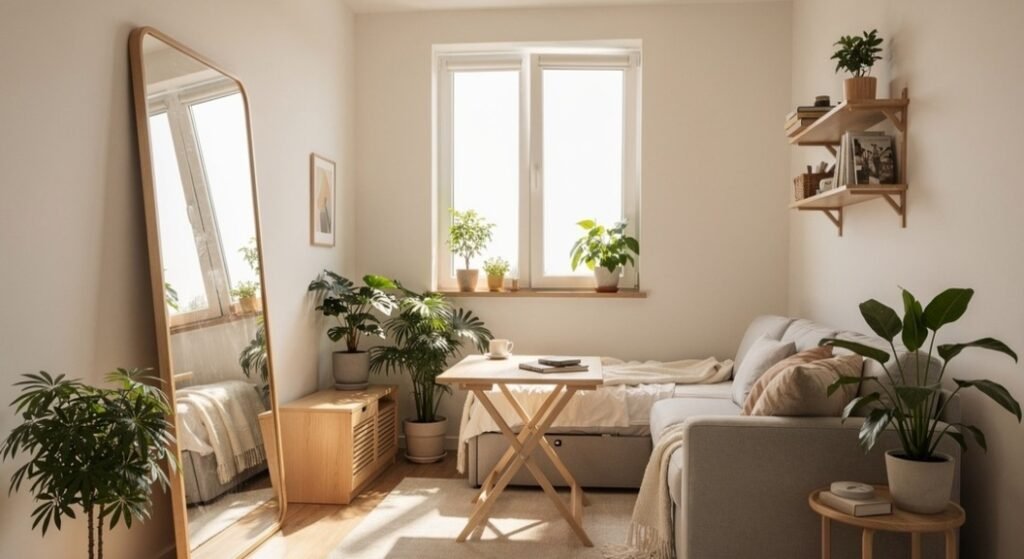
You do not need a massive house to build a healing sanctuary. You can promote spatial wellness beautifully even in a 500-square-foot (46-square-meter) rental apartment.
Focus heavily on excellent lighting, soft textures, and daily tidying habits. Add a few low-maintenance potted green plants to sunny windowsills, and use large mirrors to reflect natural light across small rooms. Even minor environmental tweaks significantly reduce stress, giving you the creative power to turn any small space into a haven.
FAQs
What is spatial wellness design? Spatial wellness design prioritizes your physical and emotional well-being by optimizing room layouts, lighting, acoustics, and materials. It focuses on creating specific environments that actively reduce daily stress and support healthy habits.
How does interior design affect mental health? Your physical environment directly impacts your nervous system. Cluttered or poorly lit spaces can easily trigger anxiety and mental fatigue. Intentional design choices like natural light and soft color palettes significantly lower cortisol levels and boost your daily mood.
What makes a room feel genuinely relaxing? A relaxing room typically features an uncluttered layout, warm indirect lighting, and grounding natural textures like raw wood or pure linen. Minimizing visual noise and utilizing soothing, nature-inspired colors allows your brain to easily pause and decompress.
How do you create better spatial flow in a home? You create excellent flow by establishing clear, unobstructed pathways and arranging your furniture to support natural movement rather than blocking it. Maintaining a highly cohesive color palette and consistent flooring also helps the entire space feel unified and peaceful.
What is biophilic design in spatial wellness? Biophilic design directly connects your indoor spaces to the outside natural world by incorporating living plants, abundant sunlight, and organic textures. This specific architectural approach satisfies our biological need for nature, which naturally lowers blood pressure and enhances mental clarity.