

How To Upgrade Your Home Sleep Environment For Better Rest
Are you lying awake every night, virtually pleading for sleep? You’re absolutely not alone in this issue. Every day, millions of people don’t sleep well. The culprit is typically under your nose. A badly planned home sleep environment destroys your overnight recuperation.
Picture yourself waking up totally rejuvenated and brimming with vivid vitality. You can simply do this by improving your bedroom today. We’ll study proven psychological hacks to make a great sleep hygiene refuge. Let us turn your room into a calm retreat.
Why is a properly designed home sleep environment crucial for your health?
Your body requires good quality slumber to recover and repair itself, it desperately needs it. A messy room works against your natural sleep architecture. This inhibits you from entering the deep healing phases of sleep. You wake up exhausted, stressed and completely unfocused. You need to correct this everyday problem to reclaim your health.
Creating a relaxing setting is a way of signaling to your brain that it’s safe. This will naturally increase your own melatonin production. Your heart rate slows. Your muscles relax. Your mind finally quiets. An excellent space is fantastic medicine for your busy overworked brain.
How might spatial wellness enhance the sleeping environment in your home?
Bedroom spatial wellness is the study of designing rooms for human health. It’s a wonderful mix of interior design and human biology. You arrange furniture and lighting in ways that support your body organically. This clever design decision is a direct stress reliever for your day to day life and encourages deep relaxation.
Imagine your bed is a special healing clinic. All should have some function for your sleep. You have to build a restorative routine in this special place. This is a spatial boundary that teaches your brain to sleep the minute you enter the room.

What is the ideal temperature for a perfect home sleep environment?
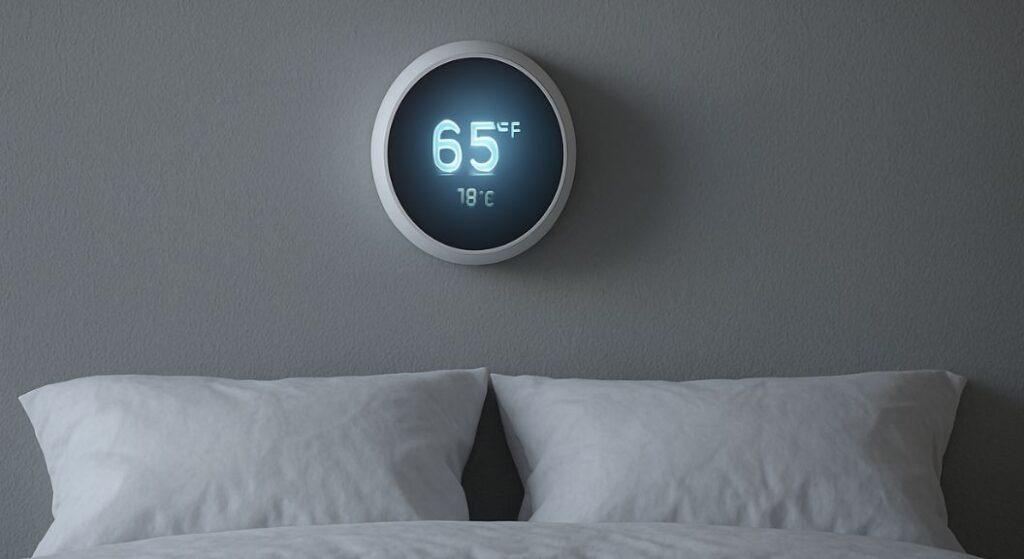
You cool down naturally as you get your body ready for sleep. A hot room totally resists this biological function. And for deep rest you need to tightly control your thermal environment. Most experts say that the sweet spot for people is 65 degrees Fahrenheit (18 degrees Celsius).
Each night, you can actively optimize your bedroom temperature. Use cotton bedding that breathes to keep your body cool. A fan or smart thermostat keeps a constant climate. Proper temperature control while sleeping means you’ll never wake up sweating again.
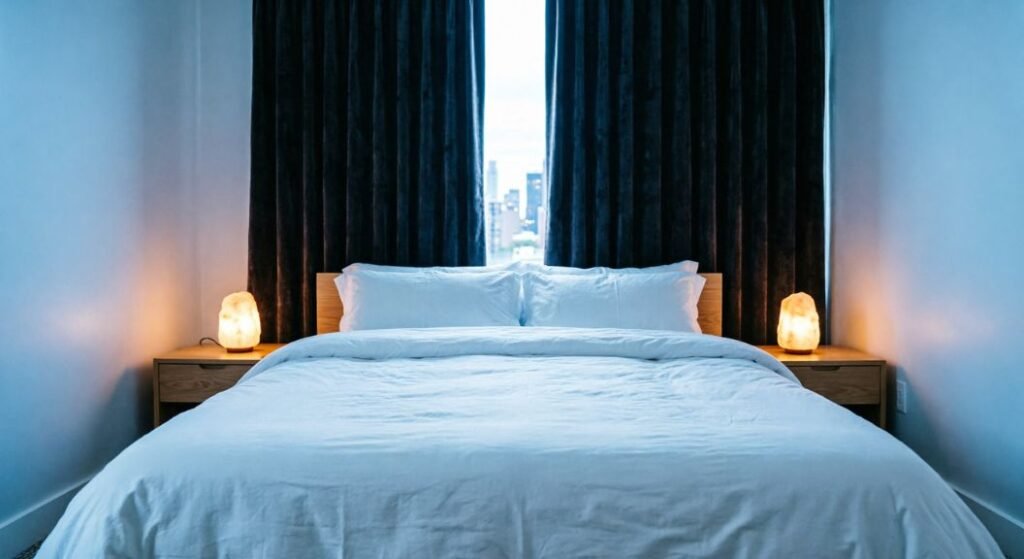
Removing artificial light can significantly improve the sleep environment in your house.
Light is the most powerful signal that regulates your brain clock Bulbs and streetlights with their brilliant lights make your brain assume it is daytime. The fastest way to fall asleep is to eliminate all artificial light. Even a little light that shines can disturb your sleep at night.
Invest in good quality blackout curtains for complete darkness. Cover any bright devices with little pieces of black tape. This profound darkness allows the optimal optimization of the circadian rhythm. When you need it most, your brain will send sleep hormones.
How do you reduce noise pollution in your home sleep environment?
Sudden loud noises will instantly pull you out of deep sleep. Traffic, barking dogs, or loud neighbors trigger your stress hormones. You must prioritize ambient noise reduction for uninterrupted rest. A quiet room is totally non-negotiable for true physical and mental recovery.
You can easily reduce ambient noise levels using a white noise machine. It creates a steady sound shield that blocks sudden interruptions. Heavy rugs and thick curtains also absorb unwanted echoes. These simple acoustic tricks keep your brain in a deep sleep state.
What role does air quality play in your home sleep environment?
You take thousands of deep breaths while you sleep at night. Stuffy, dusty air causes poor breathing and loud snoring. Fresh oxygen is a hidden pillar of restorative rest design. Poor bedroom ventilation leaves you waking up with a heavy, painful morning headache.
Keep your bedroom window slightly open to let fresh air circulate. Use a quiet HEPA air purifier to catch invisible dust and allergens. Clean air allows your lungs to work effortlessly. This simple upgrade provides deeper, much more refreshing rest for your body.
Can a minimalist layout naturally enhance your home sleep environment?
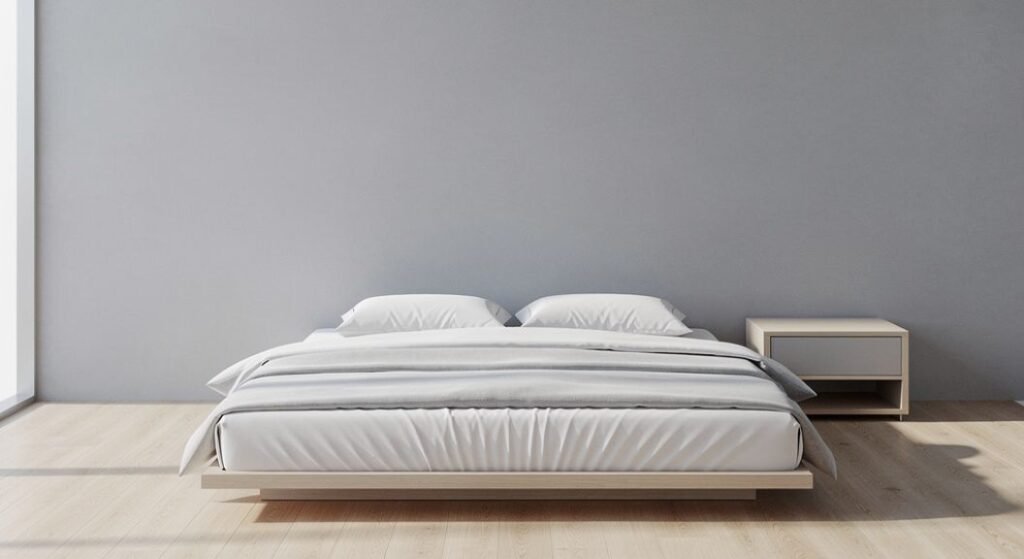
A crowded space fills your brain with useless visual information. Visual emptiness is a necessary condition for successful sensory down-regulation. Minimalist layout means no distractions in your field of vision. Now your eyes and mind can finally relax and not have to digest meaningless visual trash.
Keep your room bare bones with just a bed and a minimal nightstand. Get rid of big workstations, workout equipment, or huge bookshelves. The simple floor plan makes the space feel so vast and peaceful. The key to a peaceful mind is the simplest thing.
Clutter can also be bad for your home’s sleep environment.
Messy piles of laundry or papers induce subconscious tension. Your brain interprets physical clutter as an incomplete to-do list. That hidden stress has your brain going at night. Your bedroom floor gets clear and your busy, worried mind gets clear right away.
Take five minutes before you go to bed to straighten up your room. Put your clothing away and clear out your bedside table entirely. A clean space means the workday is officially over. At last, you can give yourself to deep tranquil sleep peacefully.
What are the best calming colors for a home sleep environment?
Stimulate your brain forcefully with bold hues like bright red or fluorescent yellow. These hard tones increase your pulse rate and don’t let you relax. Paint your walls in gentle subdued tints Cool colors can reduce the perceived temperature of a room.
Soft blues, mild greens, and mellow grays are ideal. Earthy tones reflect the soothing influence of nature. They effortlessly create a relaxing space that seems like a luxury premium spa. The moment you arrive, your eyes will be heavy.
How does your mattress affect the quality of your home sleep environment?
Old sagging beds cause intense physical discomfort and sleepless nights. You can’t reach deep, slow-wave sleep on a terrible bed. To release tight muscles, you need your spine in perfect alignment. Your largest investment in your health is a supportive foundation.
If you wake up sore, you need to update your mattress support immediately. Pick the firmness level that is best for your sleeping posture. Add a breathable mattress topper for a bit of extra comfort. Every night a nice bed almost embraces you to sleep.
Should you remove all digital devices from your home sleep environment?
Smartphones emit strong blue light that kills your sleep drive. Reading anxious emails in bed destroys your mental safety. All digital screens should be banned from your bedroom. Your bed should be used just for sleep and romance.
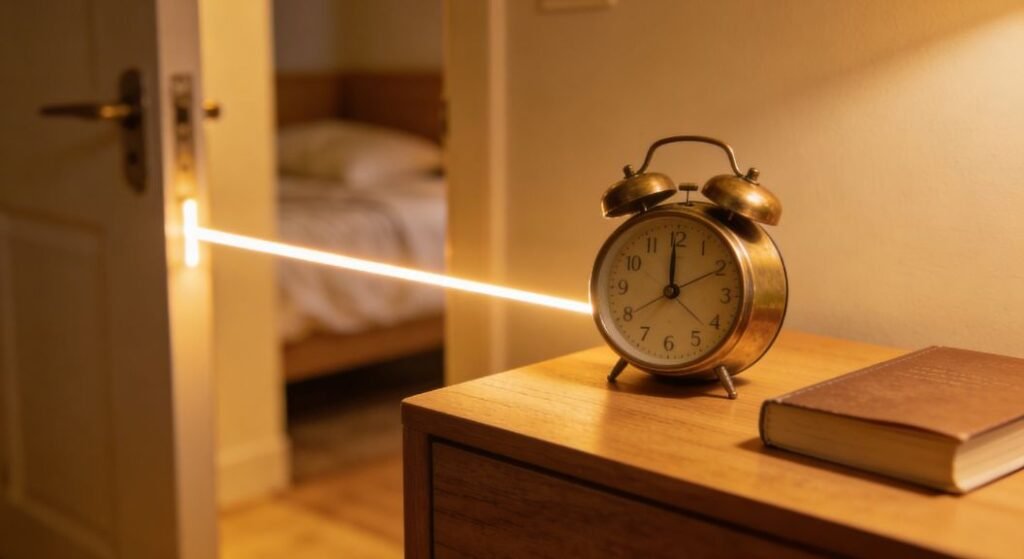
Get an old-fashioned alarm clock to replace your glowing phone. Charge your devices overnight in the kitchen or the living room. This hard limit helps in complete chronotype matching. Your brain learns that the bedroom is a totally technology-free zone.
Blocking blue light may be the solution to a sleep-friendly digital home.
Sometimes you just got to screen late at night. Blue light filtering glasses can help lessen the damaging glare from screens. They fool your brain into thinking it’s dark outside. But these are really a temporary band-aid, not a real solution.
Even if you’re wearing glasses, what you’re taking in is still stimulating your mind. Stressful text messages can keep you up regardless of the screen hue. The best thing is to get some distance between yourself and your phone. A total digital detachment is needed for true peace.

How can soothing scents upgrade your home sleep environment?
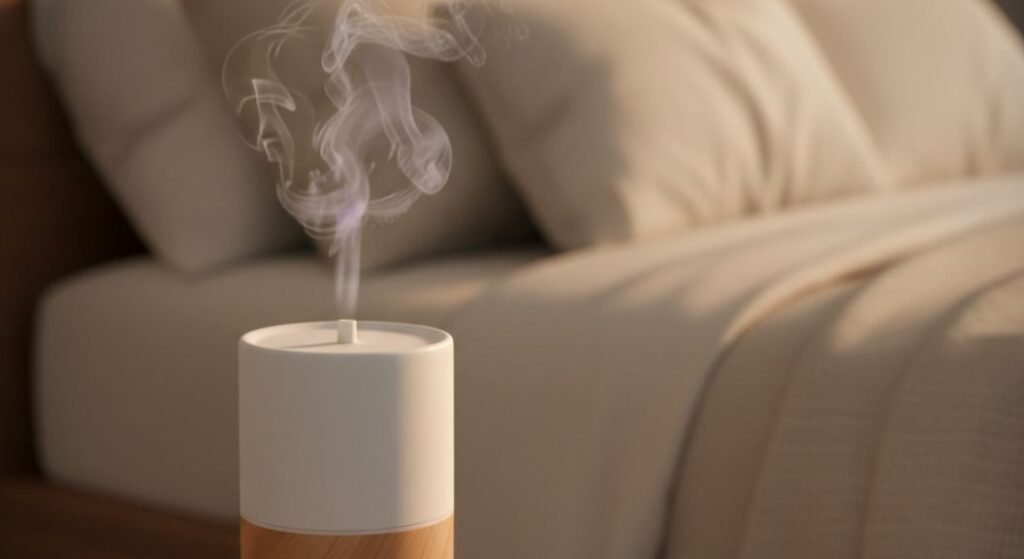
Your sense of smell directly connects to the emotional center of your brain. A beautiful scent can instantly trigger deep physical relaxation. Aromatherapy is a highly effective tool for your bedroom. It shifts your nervous system into a calm, sleepy state.
Use an essential oil diffuser with pure lavender or chamomile drops. You can also spray a gentle linen mist on your pillows. These natural fragrances build a powerful, sleepy association. Soon, just the smell will make you instantly tired.
What are the most affordable ways to improve a home sleep environment?
You do not need to spend thousands of dollars for better sleep. Start by simply washing your sheets weekly for a fresh feel. Move your bed away from drafty windows or noisy walls. Rearranging your current furniture costs absolutely nothing at all.
Use a cheap sleep mask if you cannot afford blackout curtains. Download a free white noise app on an old tablet. These tiny, budget-friendly changes create a massive impact. A perfect room is about smart choices, not expensive luxury items.

How do successful professionals optimize their home sleep environment daily?
Elite performers treat their sleep like a highly important business meeting. They strictly control their room temperature and lighting every night. They actively establish a restorative routine to wind down properly. They know poor rest destroys their competitive edge completely.
Top executives read fiction books instead of doom-scrolling social media. They keep their bedrooms incredibly cold and totally pitch black. You can easily copy these exact habits tonight. Treating sleep as a priority guarantees you will perform much better tomorrow.
Are you ready to completely transform your home sleep environment tonight?
You now possess the exact blueprint for building a perfect sleep sanctuary. Small environmental changes create profound results in your daily energy levels. You no longer have to suffer through restless, exhausting nights. True, deep recovery is finally within your reach.
Pick just one strategy from this list to implement right now. Lower your thermostat or remove your phone from the room. These tiny actions will dramatically upgrade your home sleep environment. Enjoy your incredibly peaceful and restorative sleep tonight!
FAQs:
What is the best room temperature for sleep?
The ideal room temperature for optimal sleep is around 65 degrees Fahrenheit (18 degrees Celsius). This cool environment perfectly aligns with your body’s natural nighttime temperature drop, helping you fall asleep faster.
How can I make my bedroom better for sleep?
You can easily optimize your bedroom by blocking out artificial light, using a white noise machine, and completely removing all digital devices. Keeping the space cool, dark, and quiet naturally triggers your brain to wind down.
Does a messy room affect your sleep?
Yes, physical clutter in your bedroom creates subconscious visual stress that drastically increases anxiety and keeps your mind racing. A clean, minimalist layout promotes deep relaxation and safely signals to your brain that it is time to rest.
What wall colors help you sleep better?
Soft, muted colors like pale blues, gentle greens, and warm grays are the absolute best choices for a calming sleep environment. These earthy, cool tones naturally lower your heart rate and visually reduce your daily stress.
Why is it better to sleep in a pitch-black room?
Sleeping in complete darkness maximizes your brain’s natural melatonin production, which is the crucial hormone that controls your sleep cycle. Even a tiny amount of artificial light can severely disrupt your circadian rhythm and prevent deep recovery.