
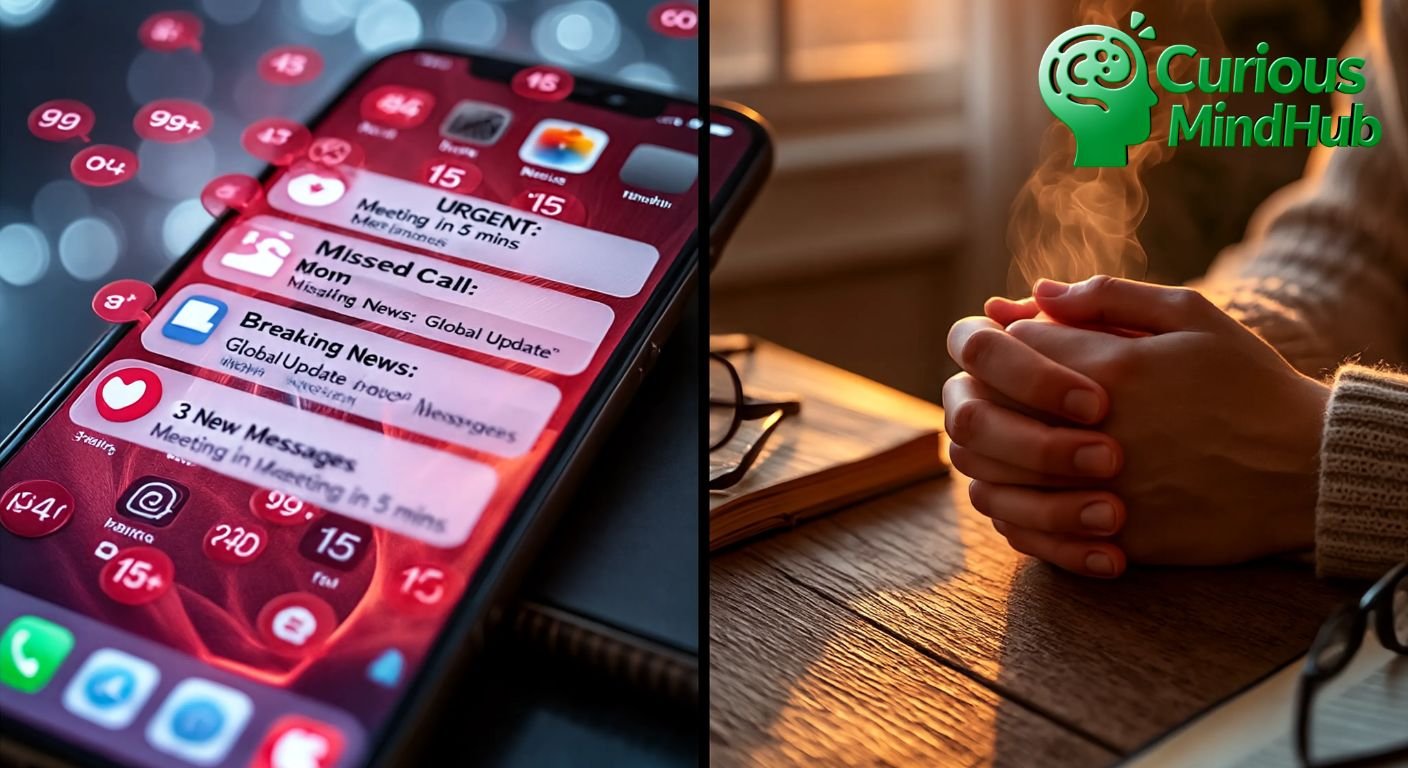

Why Your Brain Needs Boredom: The Psychological Benefits of Boredom Explained
Have you noticed how afraid we are of one silent minute? You’re in the queue at the grocery store when suddenly you reach for your smartphone. In this continual loop of digital overstimulation, real silence has become virtually alien to us. Your weary brain processes millions of data points every day, without pause. This constant onslaught generates extreme screen fatigue and siphons your natural vitality. We treat boredom like it’s an infectious ailment that we can cure with mindless scrolling. But this constant connectedness comes at a huge cost to your profoundly entrenched psychological well-being. You’re starving your mind of what it needs to heal.
What if doing nothing at all is the ultimate productivity hack? Science shows the psychological benefits of boredom are important to a healthy life. By consciously scheduling in mental quiet, your brain may finally start processing complicated emotions. This peaceful space is crucial for your creative thinking process to blossom organically. You don’t need another productivity app to repair your dispersed focus. You just need to relearn the lost art of staring at a blank wall. Let’s get to the heart of why your creative brain needs to unplug so badly and how you may regain your mental clarity today.

The Modern Fear of Doing Nothing in a Hyper-Connected World
We live in an age of continual digital stimulus, where quiet is truly dangerous. You probably check your phone the moment you get a quiet second to yourself. This current practice kills our innate inventiveness. To mend our shattered psychological health, we need to know at a fundamental level the psychological benefits of boredom.
A 2025 survey found that adults examine screens 150 times a day. This constant monitoring over time is bad for our brains. You can solve this current dilemma if you can overcome the fear of doing nothing today. Silent locations offer excellent mental leisure for your fatigued mind. Embrace it.
The Neuroscience of the Default Mode Network
Your brain switches on a unique circuit when you tune out the outside world. Scientists call this the default mode network. It is wonderful. It mixes ancient memories with new ideas to ignite genius. This moment of quiet incubation feeds your creative thinking process brilliantly.
This neural net must be in absolute stillness to work properly. This system can handle complex emotions when we have real mental rest. Without it, you have extreme cognitive overload and lose all your mental acuity. You have to let your mind run wild.

How Constant Digital Stimulation Alters Brain Chemistry
Your phone apps are meant to hijack your fragile dopamine system. This continual scrolling is very fatiguing for the screen and takes away from your everyday vitality. You don’t ever disconnect. Neuroplasticity makes the brain alter anatomically. It’s time to reassess our tech habits for the day.
We must learn how to consciously disengage to fix this biological imbalance. A digital detox lets your dopamine receptors heal up totally. Understanding the psychology of digital detox helps you reclaim full control over your life. You have the capacity to rewire your brain for the better.
The Hidden Psychological Benefits of Boredom
Nothingness can seem like a waste of time, but it has immense power. The main psychological benefits of boredom include improved self-awareness and greater emotional regulation. Today, there are several ways to practice digital minimalism. Your sensitive mind requires so much room to roam and dream.
A fascinating case study from Europe demonstrated that bored employees came up with forty percent more unique ideas. This study is evidence that arranging daily mental breaks is a wonderful productivity hack. It turbocharges the creative thought process automatically.
| Mental State | Brain Activity | Long-Term Result |
| Doom Scrolling | High Cortisol | Severe Burnout |
| Daydreaming | Neural Healing | High Creativity |

Why Doom Scrolling Is Not Real Mental Rest
You might assume that surfing through social media helps you unwind after work. But this habit really keeps us in a condition of constant partial concentration instead of resting. Your brain stays on high alert, and you are tired. This causes great screen tiredness before bedtime.
Rest is about fully detaching from addictive algorithms and dazzling screens. You have to find new ways to practice digital simplicity to attain real serenity. Replacing screen time with real mental leisure alters your evenings. You’ll sleep a lot better tonight.”
The Link Between Mental Downtime and Creative Problem Solving
The best ideas never come when you stare at a screen. The psychological benefits of boredom unlock your subconscious mind’s profound problem-solving ability. You have to learn to purposefully disconnect to access this ability. Ideas typically come to you when you’re in the shower or strolling.
By unplugging, you empower the powerful default mode network to effortlessly link disparate notions. This silent incubation phase is vitally essential for the creative thinking process to grow. You become a bright thinker just by deciding to do nothing at all.

Recognizing the Hidden Symptoms of Cognitive Overload
You might be exhausted all the time, even with 8 hours of sleep. This hidden tiredness is a classic symptom of cognitive stress in our modern lifestyle. Your fatigued brain just processes way too much stuff every single day. We consume just too much constant digital stimulus every day.
Other worrisome symptoms are memory lapses and screen weariness. The latter is especially bad during afternoon hours. You can combat this tiredness by actively carving out mental downtime each day on your busy calendar. Consider these quiet times as important medical appointments for your brain.
The Concept of Continuous Partial Attention
We rarely focus deeply on just one thing anymore. We suffer from continuous partial attention because we watch television while texting friends. This splitting of focus ruins our deeply rooted psychological well-being. Our brains were never designed for this chaos.
You cannot deeply connect with loved ones while half-glancing at a smartphone. You must learn how to unplug intentionally to give people your full presence. This bold habit alone unlocks massive psychological benefits of boredom for your relationships. You become present again.

Practical Steps to Embrace Intentional Unplugging
Start with simple steps: keep your phone in another room at mealtime. These simple strategies to practice digital minimalism increase your confidence very fast. You are employing positive neuroplasticity to change your daily habits for the better. Your brain will reward you for it in the long run.
“Most things will work again if you unplug them for a few minutes.” This wonderful remark reflects the genuine meaning of digital detox psychology. You overcome the fear of doing nothing one minute at a time. Small steps bring big improvements in lifestyle.
Designing a Digital Minimalism Environment at Home
Your daily behaviors have a lot to do with your physical environment. Get chargers out of your bedroom to battle persistent digital stimulation successfully. This physical border creates a natural mental break before you hit the pillow. Your bedroom should be your relaxation sanctuary solely.
A special quiet chair for reading or resting. Practicing digital simplicity changes your physical environment. And, putting digital detox psychology into practice at home can instantly maximize the psychological benefits of boredom. Your own personal hideaway from the constant digital noise.

How to Sit With Your Thoughts Without Reaching for a Screen
The first few minutes of total silence will be very painful. The brain wants to be entertained immediately. It takes real discipline to overcome the fear of doing nothing. Breathe deep and watch the mental strain gradually fade away. Eventually, the soreness always goes away.
Do not judge the random thoughts; let your busy mind wander freely. This is a wonderful unstructured time, and it feeds the creative thinking process absolutely organically. You are learning real digital detox psychology just by sitting motionless. You will eventually want these calm daily moments.
Experiencing Long-Term Mental Clarity After Breaking the Loop
The ultimate benefit of unplugging is complete mental clarity. You’ll finally get rid of screen fatigue and wake up feeling truly refreshed every morning. Finally, taking back control sends your total psychological well-being over the roof. Life once more becomes colorful and obvious.
You become a very conscious, very intentional human being. Never underestimate the psychological benefits of boredom for your bright future. You’re using neuroplasticity to make a better brain. A real mental break allows you to think better and live beautifully.
What Did We Learn From This Journey?
We’ve discussed how our modern screen fixation totally wrecks our natural tranquility. You knew that real creativity needs room to blossom well. Your mind needs quiet time to process complicated emotions regularly. Your mind needs quiet time to process complicated emotions regularly. Re-entry is never a punishment. It is really a nice gift you give yourself.
When you embrace the psychological benefits of boredom, your whole day changes. Now you have the power to take back your valuable attention span. I hope that today you leave your phone at home and just stare out the window. This stimulating cerebral break will be a boon to your creative brain. You are finally ready to live with deep intention.

FAQs:
Is boredom an effect of psychological experiments? Yes, many psychology experiments prove the boredom effect is completely real and highly measurable. Researchers observe that induced boredom reliably triggers the default mode network and sparks creative problem-solving instantly.
Is being bored good for your brain? Being completely bored is actually incredible for your brain’s overall health and longevity. It provides essential mental downtime so your mind can process complex emotions and form new neural connections.
What causes boredom in the brain? Boredom occurs when your brain experiences a sudden drop in dopamine and lacks external stimulation. This temporary chemical dip simply signals your mind to start looking inward for deep engagement.
Is boredom bad for your mental health? Chronic boredom combined with severe isolation can negatively impact your mental health over a long time. However, intentional and temporary boredom is absolutely vital for reducing daily anxiety.
Why boredom is good for your child: Unstructured boredom forces children to invent their own games and use their deep imagination. This vital quiet time builds their creative problem-solving skills and teaches them essential emotional independence.